
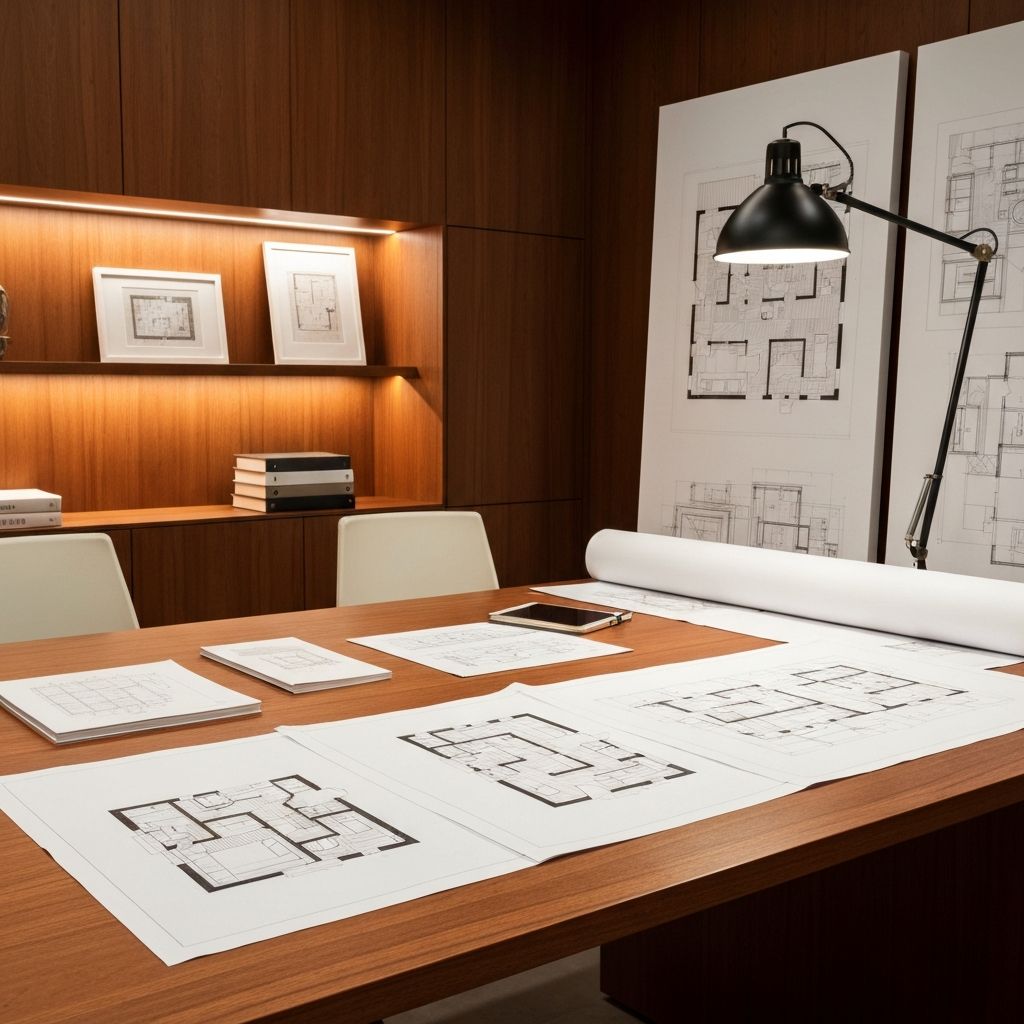
This article covers seven residential design decisions that become significantly more expensive when changed after construction begins, and how to identify which ones deserve attention during the planning stage.
Most plan changes during construction cost a few hundred dollars and a phone call. A door swing reversed. A window relocated by a few inches. Cabinet hardware swapped. Annoying, but minor.
Other plan changes cost tens of thousands of dollars and weeks of lost time. They require new structural engineering, permit revisions, mechanical rework, and sometimes demolition of work already completed. The difference between the two categories isn't usually visible to homeowners until they're standing on the job site asking why their “small change” just cost them $40,000.
This piece is about the second category. Specifically: the seven decisions that, in our experience, cause the most expensive mid-construction changes — and how to lock them in before the foundation goes down.
1. Primary suite location
The single most expensive change clients make mid-build is moving the primary bedroom from one part of the house to another. It triggers cascading effects: plumbing reroutes for the bathroom, HVAC zoning changes, structural revisions if the new location requires longer spans, electrical rework, and often window placement changes that affect exterior elevations. Once framing is up, the cost of relocating a primary suite frequently exceeds $50,000.
The decision deserves real time before construction. Live in the plan mentally. Walk through your daily routine. Where is the morning sun? How far is it from the kitchen, the laundry, the kids' rooms, the home office? If you're hesitant about the location, resolve it before the foundation pour, not after.
2. Open versus closed kitchen
This decision affects everything: structural elements (whether you need a beam to span the open area), HVAC (open floor plans require different load calculations), acoustics (cooking sounds and smells travel further), lighting design, and the structural location of any second-story floor above. Changing your mind from “closed” to “open” mid-build often requires removing a load-bearing wall, which is structural surgery, not a tweak.
Decide early, and pressure-test the decision against how you actually live, not how you imagine you might.
3. Ceiling heights and volume changes
Ceilings are easy to overlook on a 2D floor plan. They become impossible to ignore when you're standing in the framed space and realizing the great room feels short. Raising a ceiling mid-construction means changing roof framing, rerouting mechanicals, and often revising structural calculations. It's one of the most expensive “small” changes possible.
If you're undecided about ceiling heights, ask your designer to model the volume in 3D before plans are finalized. Two-dimensional plans hide ceiling problems. (For a deeper look at how to read floor plans well, see our article on evaluating residential floor plans.)
“Hard conversations cost less in the planning stage than they cost mid-build. The price difference is usually 10x to 100x.”
4. Window sizes and placement on load-bearing walls
Moving a window six inches in a non-load-bearing wall is trivial. Moving the same window in a load-bearing wall — or enlarging it — requires header recalculation, structural engineering, and often inspection sign-off. If the wall is structural and the window changes its load path, the cost compounds.
A good plan locks window placement and rough opening sizes early. If you're not sure about a window, defer the decision only on non-structural walls.
5. Roofline geometry
Changes to roof shape — adding a dormer, raising a ridge, changing slope — affect framing, exterior elevations, gutter and drainage planning, attic ventilation, and (in some cases) the foundation footprint if eaves change. Mid-build roofline changes are among the most disruptive revisions possible because they touch nearly every other building system.
If you have any uncertainty about your home's exterior, resolve it before framing starts. Better yet: model exterior elevations in 3D before construction begins. (For more on roofline cohesion specifically, see our article on tying additions into existing homes.)
6. Stair location
Stairs are anchored by structural framing, plumbing chases, and HVAC routing. Moving a staircase mid-build often means reframing two floors and rerouting systems that pass through or around it. The cost is rarely under $30,000 once you account for everything affected.
Stair location should be one of the earliest decisions locked in your plan. If you're not sure about it, it's worth bringing in a designer to pressure-test the location specifically.
7. Mechanical room and utility runs
This is the one most clients underestimate. Where the HVAC equipment lives, where the water heater sits, where the electrical panel is mounted, and how plumbing and ductwork run between floors — these decisions get baked into framing very early. Changing them later means cutting into walls, reframing chases, and sometimes relocating finished surfaces.
Most homeowners assume their architect handled mechanical layout. Sometimes they did. Sometimes they deferred it to the contractor. Ask the question explicitly: Who is responsible for mechanical room location and utility runs in this plan? Are they final?
How to use this list
Before construction starts, sit with your plans and walk through these seven items one at a time. For each, ask: Am I genuinely confident in this decision, or am I deferring because the conversation is hard?
If any of the seven feel uncertain, that's the moment to bring in additional eyes — a Plan Review, a Strategy Session, or even just a long conversation with your architect specifically about that decision. The cost of an outside review is almost always less than the cost of changing your mind after framing.
Quick Answers
What's the single most expensive design change to make during construction?
Moving the primary bedroom suite. Once framing is up, relocating the primary suite often exceeds $50,000 in cascading structural, mechanical, plumbing, and electrical rework.
Should I finalize ceiling heights before construction starts?
Yes. Changing ceiling heights mid-build affects roof framing, mechanical routing, and structural calculations, making it one of the most expensive late-stage changes possible.
How much does it cost to move a staircase during construction?
Rarely under $30,000 once you account for reframing two floors and rerouting plumbing, electrical, and HVAC that pass through or around the stair location.
Why do roofline changes during construction cost so much?
Roofline changes affect framing, exterior elevations, gutter and drainage planning, attic ventilation, and sometimes the foundation footprint. They touch nearly every other building system.
Who should review my plans before construction starts?
Someone with both design experience and construction familiarity. A Plan Review service catches structural, mechanical, and layout issues that the architect's scope may not have addressed in depth.