
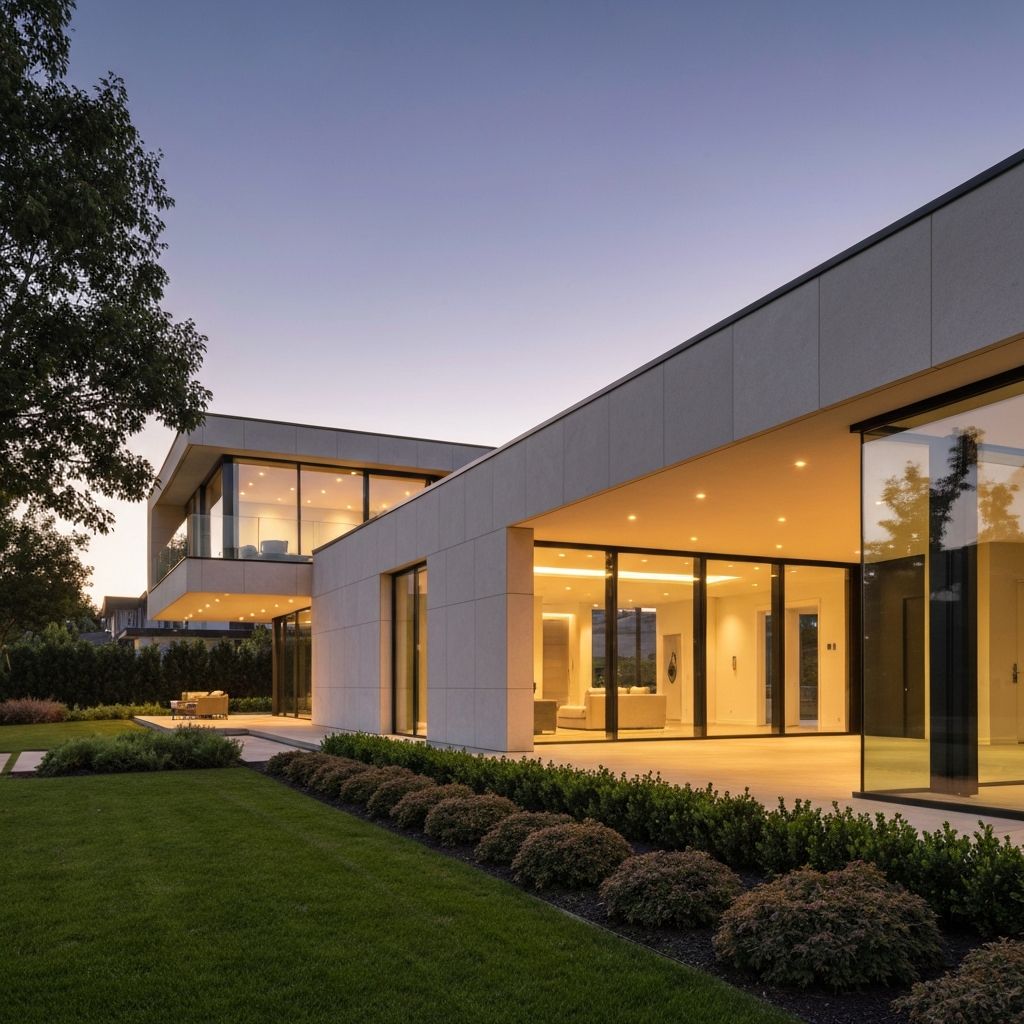
This article explains why home additions often look added-on even when designed by skilled architects, and walks through the specific design moves and deliverables that produce true exterior cohesion.
Most additions solve a functional problem well. The kitchen gets bigger. The primary suite gains a closet. The kids each get their own room. By the time the architect's drawings are done, the inside of the home works the way you wanted.
Then you stand in the front yard and look at the house, and something feels off.
The addition reads as added on. The roofline doesn't quite resolve. The exterior materials are right but the proportions are wrong. Or the proportions are right but the materials don't tie together. Or you can't articulate what's off — you just know that the home looks like two houses bolted together rather than one home that always existed this way.
This is one of the most common, and least addressed, problems in residential additions. It deserves its own conversation.
The functional problem and the cohesion problem are different problems
Architects are trained to solve spatial and functional problems. How do we add 800 square feet here? How do we work within zoning setbacks? How do we route mechanical systems through the existing home? These are the problems most architectural fees are scoped to address.
Exterior cohesion is a different problem. It asks: How do we make the addition feel like it always belonged? That question requires sustained design attention to massing, rooflines, exterior materials, window proportions, eave details, and the small alignments that make a home read as singular rather than spliced.
Most architects can solve this problem when they have time and budget. Most architects don't have time and budget for it inside a typical addition scope. The fee structure rewards solving the functional problem and producing permittable drawings. Cohesion work is often the first thing dropped when scope tightens.
This isn't a criticism of architects. It's an observation about how the work is typically scoped. If exterior cohesion matters to you — and for most homeowners, it does — you have to ask for it explicitly, or bring in supplementary design thinking that focuses on it.
“A successful addition looks like the home always had it. The addition disappears, and what you notice instead is just a beautiful home.”
What “cohesion” actually means
When designers talk about exterior cohesion, they're referring to several specific design moves working in concert:
Massing.The relationship between the original home's volume and the addition's volume. A two-story addition next to a one-story original ranch will read as added-on unless the massing is handled carefully. Sometimes the answer is stepping the addition down. Sometimes it's adding a connecting element that buffers the height change. Sometimes it's pushing the addition behind the original home so it's invisible from the street.
Roofline geometry. The biggest cohesion failure happens at the roof. If the original home has a 6/12 gable roof and the addition has a flat roof, no amount of matching siding will save the cohesion. Roofs need to either match the original geometry or transition through a deliberate design move (a connecting flat element, a stepped roofline, a clear hierarchy where one roof reads as primary and the other as secondary).
Exterior materials.Materials need to either match the original exactly (which is often impossible because materials age and the new material won't have weathered) or contrast deliberately. The worst outcome is “almost matching” — siding that's the same type but slightly different in color, texture, or profile. The eye reads “almost matching” as a mistake. It reads “deliberately contrasting” as design.
Window proportions and rhythm. If the original home has tall narrow windows and the addition has wide horizontal windows, the home will look like two homes. Window proportion is one of the strongest visual signals of architectural identity. Cohesion requires either matching the proportional system or creating a deliberate rhythmic relationship between the two.
Eave details and trim. The places where roofs meet walls — eaves, fascia, soffits, corner trim — are where the eye looks to decide whether the home reads as one piece. Mismatched eave depths or trim profiles will undermine cohesion even if everything else is handled.
Connecting elements.Sometimes the answer to cohesion isn't matching at all. It's adding a deliberate connector — a breezeway, a glass link, a stepped element — that lets the original home and the addition read as related but distinct. This is a more sophisticated design move and often produces stronger results than trying to make the addition disappear.
What to ask for
If you're working with an architect on an addition and you want exterior cohesion to be a priority, here are the specific things to request:
Deliverables that matter for cohesion:
- Exterior elevations rendered or modeled in 3D. Two-dimensional elevations don't reveal cohesion problems. A 3D model from the typical street-view angles will show you what the home actually looks like from where people stand.
- A materials and proportions strategy as a deliverable. Most architects produce a materials list. Fewer produce a written strategy explaining why those materials, how they relate to the original home, and what design moves tie everything together. Ask for the strategy in writing.
- Multiple exterior options before committing. A single elevation is hard to evaluate. Three elevations — one that matches conservatively, one that contrasts deliberately, one that uses a connecting element — gives you something to compare and react to.
- Eave, trim, and roof transition details. These are the make-or-break details for cohesion. Ask to see the specific drawings showing how the addition's roof meets the original home's roof, how trim profiles relate, how eaves align (or don't, deliberately).
When to bring in supplementary design
If your architect is excellent at functional design but cohesion isn't their strongest suit, or if their scope doesn't include the depth of cohesion work you want, supplementary design help makes sense. (For a broader explanation of how design strategy fits alongside architectural services, see our article on who does what in a residential project.)
A focused design strategy session — bringing in a designer specifically for the cohesion question — can resolve in a few hours what would otherwise become a year of regret every time you pull into your driveway. The cost is meaningful but bounded, and the value is permanent.
What that supplementary design work should produce: specific recommendations on rooflines, massing adjustments, materials strategy, window proportions, and the design moves that will make the addition feel original. Recommendations you can take back to your architect to refine and execute.
The goal isn't to replace your architect. It's to make sure the cohesion question gets the dedicated attention it deserves before construction starts.
One last thing
The hardest part of cohesion work is that it's invisible when done well. A successful addition looks like the home always had it. The addition disappears, and what you notice instead is just a beautiful home.
That's what makes cohesion design feel optional in the planning stage — there's no obvious deliverable, no thing to point at and say “that's what I'm paying for.” But the cost of getting it wrong is years of looking at your home and feeling something is off, every single day.
It's worth resolving before construction starts.
Quick Answers
Why does my addition look added-on even though my architect designed it?
Most architectural fees are scoped to solve the functional problem (how to add square footage that meets code and works internally). Exterior cohesion — how the addition reads as original to the home — requires separate design attention that often isn't included in standard architectural scope.
What is exterior cohesion in residential design?
The combination of massing, roofline geometry, exterior materials, window proportions, eave details, and connecting elements that make an addition feel original to the home rather than visibly added-on.
What's the biggest cohesion mistake on home additions?
Mismatched roofline geometry. If the original home has a gable roof and the addition has a flat roof, no amount of matching siding or trim will resolve the visual disconnection.
Should materials on an addition match the original home exactly?
Either match exactly (often impossible because materials weather differently) or contrast deliberately. "Almost matching" reads as a mistake; deliberate contrast reads as design.
Can I bring in a designer to help with cohesion if I already have an architect?
Yes. A focused design strategy session on cohesion can produce specific recommendations you take back to your architect, without replacing the architectural relationship.